Other live cases · Thurrock draft Local Plan · Policy SS03
Arena Essex: a data centre on a wildlife site.
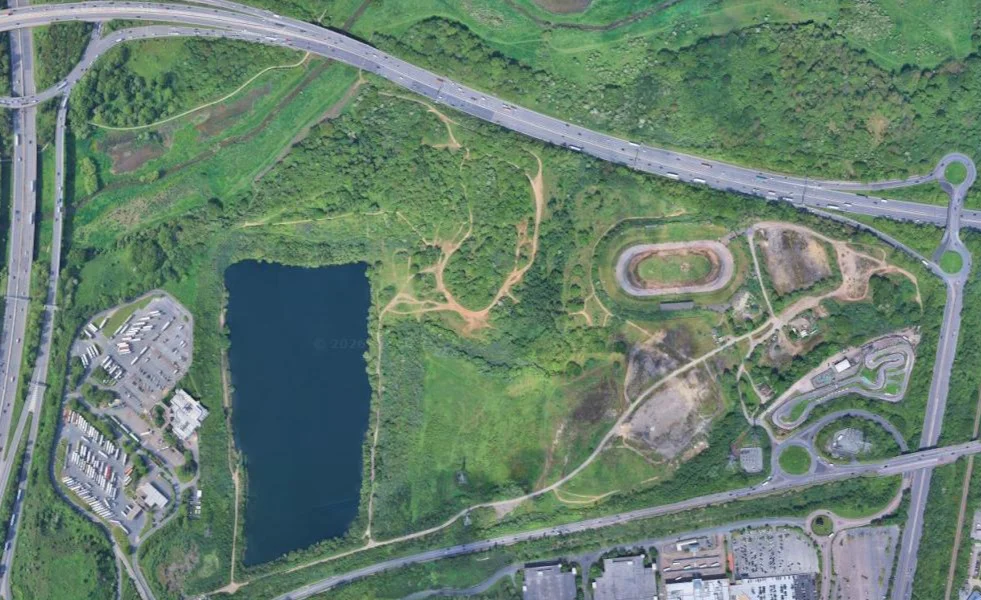
Thurrock’s draft Local Plan allocates the former Arena Essex raceway at Lakeside for a data centre campus, taking much of a Local Wildlife Site.
Our representation was filed on 12 October 2026, by email to the Council and through its online consultation portal. It is made by Dr Jackie Lighten on behalf of Protect Langdon, and it is now public. This page sets out what it says.
Thurrock Council’s draft Local Plan proposes a data centre campus on the former Arena Essex raceway and fishing lake at Lakeside. The plan calls it Policy SS03. The site includes part of Arena Essex Local Wildlife Site, home to an Endangered plant and a community of rare insects. We have asked the independent Planning Inspector to delete the policy.
Why Protect Langdon? It is the same plan, tested against the same law, and it shows many of the same failings we found at Lower Langdon: a habitats assessment that relies on the wrong water company, wildlife sites the Council promised to assess and did not, and a site chosen because its promoter put it forward rather than because it was compared with anywhere else.
The site
The eastern part of the site is the former Arena Essex Raceway, opened in 1978 for stock car and banger racing, with speedway from 1984. The stadium closed in 2018. Since then nature has taken it back.
Part of the site is Arena Essex Local Wildlife Site (25.9 hectares), selected for its post-industrial habitats, its plants and its insects. The Council’s 2022 register describes “a mosaic of calcareous grassland and open vegetation within scrub and young woodland”, with a south-facing bank and seasonally wet hollows. Its priority habitat is open mosaic habitat on previously developed land.
The site also holds Thames Terrace Grassland, which Natural England calls “a nationally important habitat”.
What lives there
The Council’s own register records Broad-leaved Cudweed at one of only a few known sites in the UK. The developer’s surveys found 530 kinds of invertebrate on the site, 48 of them of conservation importance, and its environmental statement rates the insect community of “National” importance.

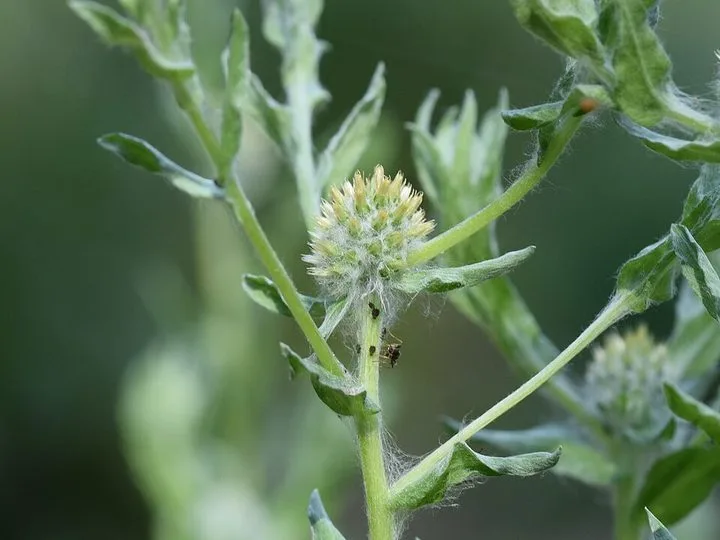
England Red List: Endangered
Broad-leaved Cudweed
Filago pyramidata
At one of only a few known sites in the UK, and by far the most significant population in Essex. Most plants grow on the old viewing bank of the arena.
England Red List: Near Threatened
Common Cudweed
Filago germanica
Recorded in the site’s herb-rich calcareous grassland, with the rarer Broad-leaved Cudweed.
Essex Red List
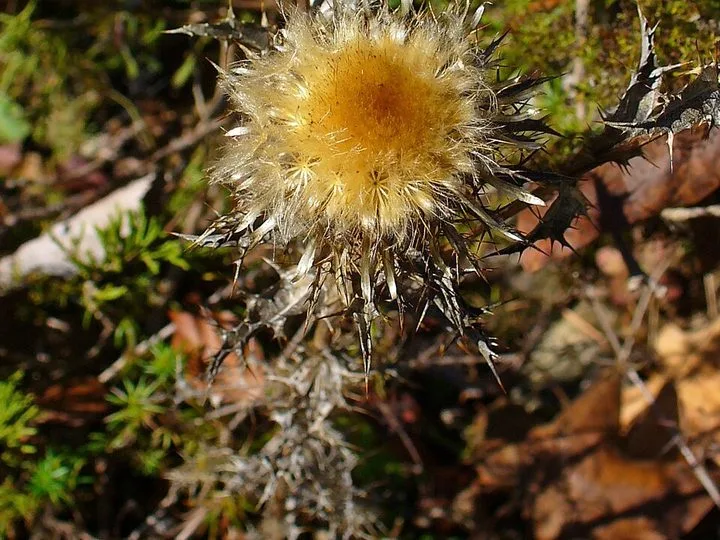
Carline Thistle
Carlina vulgaris
One of two Essex Red List plants in the site’s calcareous grassland.

Essex Red List
Hound’s-tongue
Cynoglossum officinale
The second Essex Red List plant recorded in the grassland.
Priority species
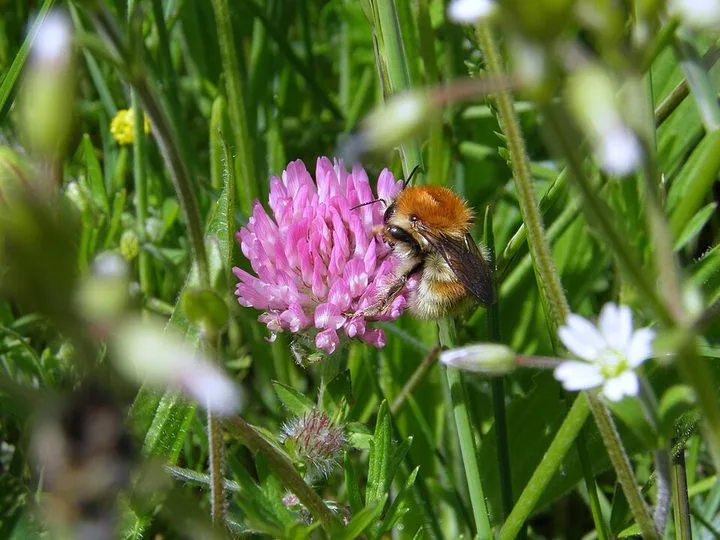
Brown-banded Carder Bee
Bombus humilis
One of three Priority species of insect the Council’s register names on the site.
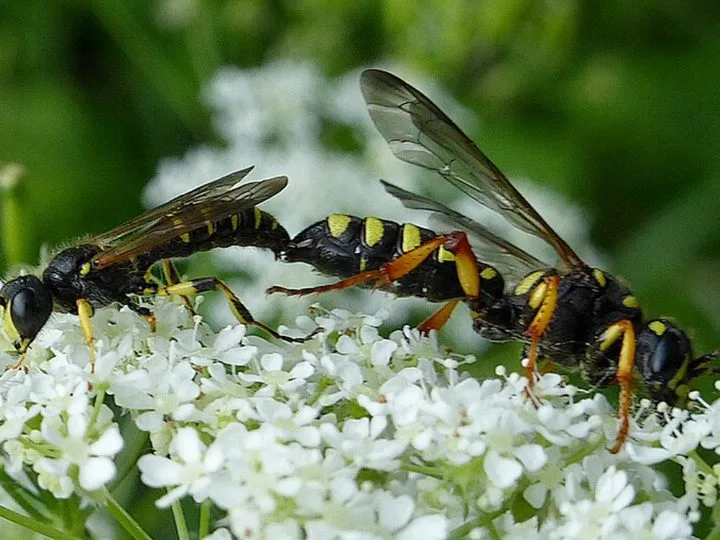
Priority species
Five-banded Tailed Digger Wasp
Cerceris quinquefasciata
A Priority species. The register links the site’s insect community with short turf, bare ground and decaying wood.
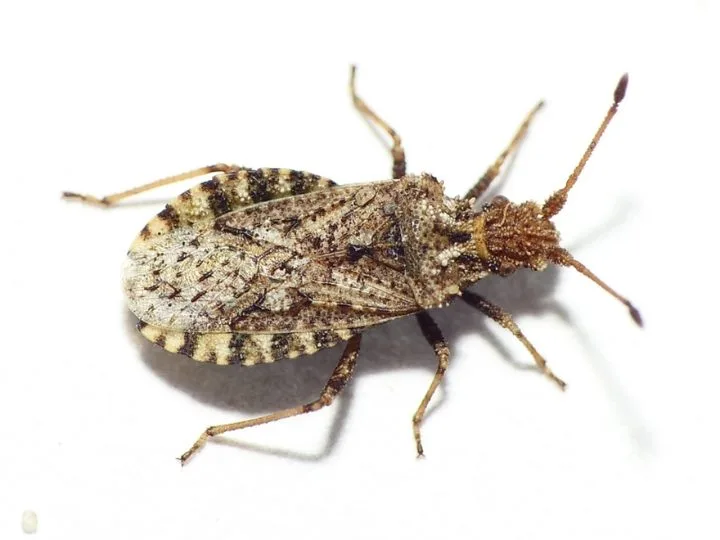
Notable in Essex
Fallén’s Leatherbug
Arenocoris fallenii
Widespread across the open, sparsely vegetated areas. The applicant’s survey found only one other record in South Essex.
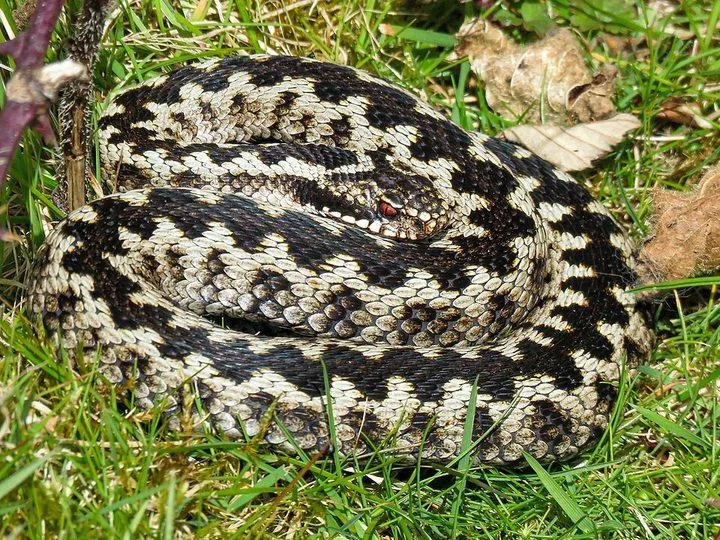
Protected
Adder
Vipera berus
Known to be present on the site, with slow worm and common lizard.
Also recorded
- 18 Nationally Rare and 57 Nationally Scarce species of invertebrate, in the surveys the register relies on.
- Two nationally scarce weevils new to Essex, found by the developer’s surveyors in pools of water purslane on the site.
- A picture-winged fly, Dorycera graminum, the third Priority insect named in the register.
- Thames Terrace Grassland. The developer says it “only exists within the UK in the tens of hectares”.
Sources: Thurrock Local Wildlife Sites Register 2022, site Th16; the developer’s Environmental Statement, Chapter 6; Natural England’s response of 28 August 2026. The photographs show each species; they were not taken on the site. From Wikimedia Commons: Broad-leaved and Common Cudweed, Krzysztof Ziarnek (Kenraiz), CC BY-SA 4.0; Carline Thistle, H. Zell, CC BY-SA 3.0; Hound’s-tongue, Fornax, CC BY-SA 3.0; Brown-banded Carder Bee, kitenet, CC BY-SA 2.0; Five-banded Tailed Digger Wasp, Matej Schwarz, CC BY 3.0; Fallén’s Leatherbug, Dick Belgers (Waarneming.nl), CC BY 3.0; Adder, Sam Thomas, CC BY 2.0. Images cropped.
The policy and the application
Policy SS03 allocates about 52 hectares for “a data centre campus, defined as critical national infrastructure”, on about 27 hectares in the eastern part of the site. The plan itself describes the data centre as “additional growth beyond the EDNA forecasts”: in other words, beyond the employment land its own needs study says the borough requires.
The policy accepts “any loss of the existing on-site Local Wildlife Site”, to be off-set by ecological mitigation. Another policy in the same plan, for a different site, requires development not to cause significant harm to a Local Wildlife Site at all.
The applicant for planning permission is Global Infrastructure UK Ltd. The Council’s own Infrastructure Delivery Plan says the site “has been acquired by Google”.
In December 2023, at the plan’s first consultation, the site was proposed for general employment, “suitable for all employment uses”. No data centre was proposed. This is the first consultation in which the public and the statutory bodies have been able to comment on a data centre here.
We have also objected to the planning application
The developer’s planning application for the data centre campus (25/00573/OUT) is being considered by the Council separately from the plan. On 12 October 2026 we sent the Council a formal objection, asking it to refuse the application.
Our objection says the development would cause significant harm to wildlife that has not been avoided, cannot be adequately mitigated, and would be compensated by measures that are either short of what is needed or not yet defined. That conflicts with national policy and with the Council’s adopted plan. We have asked to be told the date of the planning committee meeting and to speak at it.
What we have asked for
- Delete Policy SS03 and remove the allocation from the Policies Map.
- Keep Arena Essex Local Wildlife Site protected under the plan’s green infrastructure policy (Policy SP07).
- If the Inspector keeps the policy, make six changes, without prejudice to deletion (representation, section 3):
- take the Local Wildlife Site out of the allocation and protect it on the Policies Map;
- require that development does not cause significant harm to the Local Wildlife Site, as the plan already does for another site;
- require evidence of a grid connection offer, a water supply agreement, an assessment of emissions from standby generators, and compliance with the plan’s energy policy before permission is granted;
- require any compensation for lost habitat to be defined, located within Thurrock and secured before permission is granted;
- say clearly whether the site is taken out of the Green Belt and, if so, set a firm new boundary;
- require an assessment of speedway and motorsport needs, prepared with Sport England and the Speedway Control Bureau.
Why the policy fails
Each point below is set out in full in the representation, with the document and page for every claim. The numbers in brackets are the paragraphs to look up.
1. The habitats assessment does not hold up
The Habitats Regulations Assessment checks whether the plan could harm the Thames Estuary and Marshes Special Protection Area and Ramsar site, wetlands protected for their birds. Its entry for SS03 was written for a town centre site; the site is not in a town centre. It does not rule out harm from air pollution and says more evidence is needed “before the plan can be adopted”. Its water quality conclusion relies on measures by Southern Water, which serves Kent. Thurrock’s sewerage company is Anglian Water, which the assessment never mentions. (4.1 to 4.5)
2. No other location was tested
The plan’s sustainability appraisal never compared other locations for a data centre. Part of its appraisal of SS03 repeats text written for a Grays town centre policy, about a cinema and church buildings. It scores the plan’s largest electricity user as positive for climate change without mentioning how much electricity it would use. (4.6 to 4.9)
3. The wildlife would be lost
The Council’s own appraisal says much of the Local Wildlife Site “will be lost to development”. The developer’s environmental statement says about half of its habitats would go. For the loss of 7.88 hectares of potential Thames Terrace Grassland, which Natural England calls “a nationally important habitat”, the developer states: “No specific mitigation is available”. Natural England’s own study of this habitat is due “in the coming months”, but the plan allocates the site first. The site’s weak Green Belt score measures the roads and industry around it, not what lives on it. (5.1 to 5.9)
4. No comparison of locations
The plan calls the data centre “additional growth beyond the EDNA forecasts”. The site came into the plan through its promoter’s proposal, and no other location was compared for a data centre. The campus would provide about 12 jobs per hectare, against about 69 for the plan’s employment land as a whole. (5.10 to 5.15)
5. A promise from 2023 that was not kept
At the first consultation in 2023, the Council said the need to protect Local Wildlife Sites “will be assessed as the proposed allocations are reviewed”. Apart from the sustainability appraisal’s scoring, no such assessment is in the evidence for the plan. (5.16)
6. The speedway stadium
Sport England asked the Council for “an up to date and objective assessment of speedway needs”. National policy says sports grounds should not be built on unless an assessment shows they are no longer needed. No such assessment is in the evidence for the plan, and the plan does not mention speedway. (5.17 to 5.19)
7. The compensation is not real yet
Most of the required biodiversity net gain would be met outside the borough, at a habitat bank at Fingringhoe, outside Thurrock, which Natural England considers likely “too distant” for many of the species affected. Compensation for the Thames Terrace Grassland “has not yet been defined”. (6.1 to 6.4)
8. The grid connection is unassessed
The campus would draw its power from the national grid at Barking. No document in the plan’s evidence assesses that connection. The campus alone would use about 3.5 times the borough’s modelled 2022 electricity consumption for buildings and transport. (6.5 to 6.9)
9. Water
Essex & Suffolk Water objects to the planning application and has not committed to supply it. Its 2024 response to the developer said it “would not permit a connection capable of supplying the proposed volume of mains water”. The site sits over the source protection zones of a public drinking water supply. (6.10 to 6.12)
10. Supporting points
The representation’s Appendix A adds further points: Green Belt land released without an identified need for this use; the Council’s own viability evidence, which finds its data centre test case unviable; the plan’s own energy policy (Policy DMP01), which nothing tests the campus against; transport; 94 diesel standby generators that no plan document mentions; and operational carbon emissions of about 68% of the borough’s total.
Words explained
- Regulation 19: the final public consultation on a draft local plan, before it is sent to the Government for examination.
- Examination: the public testing of the plan by an independent Planning Inspector, who can recommend that a policy is deleted if it fails the legal tests.
- Local Wildlife Site: a site recognised for its wildlife value and listed in the Council’s register. It does not have national legal protection, but national policy asks plans to identify and safeguard such sites.
- Open mosaic habitat: a patchwork of bare ground, grassland and scrub that grows on old industrial land. It is a priority habitat in England and is often rich in rare insects.
- Thames Terrace Grassland: grassland on the sand and gravel terraces of the Thames. Very little of it survives.
- Habitats Regulations Assessment: the legal check that a plan will not harm wildlife sites of international importance, here the Thames Estuary and Marshes Special Protection Area and Ramsar site.
- Sustainability appraisal: the legal assessment of a plan’s social, economic and environmental effects, including a comparison with reasonable alternatives. Thurrock calls it the Integrated Impact Assessment.
- Biodiversity net gain: the legal requirement that development leaves wildlife habitat at least 10% better than before.
Read it for yourself
- Download our representation on Policy SS03 (PDF, 33 pages). Every claim gives its document and page; the documents are listed in its Appendix C.
- The Arena Essex case study on the Evidently website, where the full findings and an interactive map will appear.
- The Council’s draft Local Plan (Policy SS03 is on pages 77 to 80).
Representation by Dr Jackie Lighten on behalf of Protect Langdon.